Candle makers get the best results from custom cartons when the box style matches the vessel: tuck-end folding cartons for jars and tins on retail shelves, rigid boxes for premium gift candles, and mailer boxes for online orders. Customized Cartons prints all three from a minimum of 12, sends a free mockup within 24 hours, and ships in about 2 weeks.
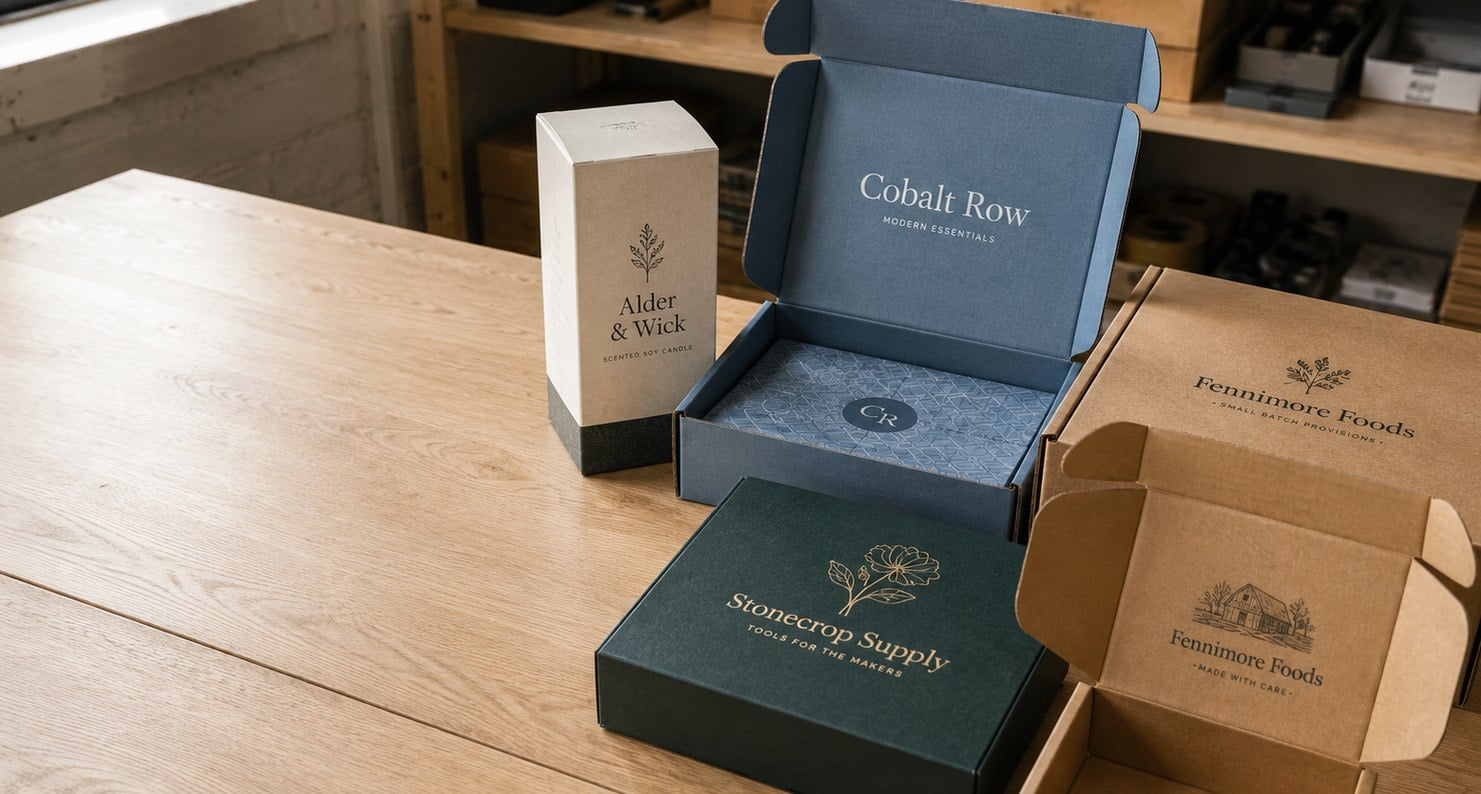
- Folding tuck-end cartons suit most jar and tin candles sold in shops.
- Rigid gift boxes fit premium candles, multi-wick vessels and holiday sets.
- Custom mailer boxes protect candles shipped straight to online customers.
- Minimum order is 12 cartons, with a free mockup within 24 hours.
- Standard turnaround is about 2 weeks after you approve the design.
What kind of custom carton works best for a candle?
For most candle makers, a folding tuck-end carton is the best everyday box for a candle in a glass jar or metal tin. The carton slides over the vessel, closes with tuck flaps at both ends, and gives you all four side panels plus the top for branding, scent notes and care instructions. Folding cartons also ship flat, so a small studio can store a full run without giving up workroom space.
The right style changes with how the candle is sold. A candle that sits on a boutique shelf needs a clean front panel that reads from a distance. A candle that goes into a gift basket benefits from a lid-and-base rigid box that feels substantial when opened. A candle sold through your own online shop travels best in a mailer box that survives the parcel network on its own.
| Carton style | Best candle use | Why candle makers choose it |
|---|---|---|
| Folding tuck-end carton | Jar and tin candles in retail | Flat storage, full-panel printing, fits shelf displays |
| Rigid gift box | Luxury candles and gift sets | Heavier feel, premium unboxing, reusable by the customer |
| Mailer box | Direct-to-customer shipping | Self-locking, sturdy, branded inside and out |
| Retail product box | Window or hang-tab displays | Shows the wax color or vessel through the box |
How do you keep a glass candle jar from breaking inside the carton?
A glass candle jar stays safe in a custom carton when the box is sized closely to the vessel and the jar cannot move inside it. Most breakage happens when a jar rattles in a box that is too large, so the first step is measuring the jar at its widest point, including any wooden or metal lid, and sending those measurements with your quote request.
Beyond a snug fit, candle makers have several options for extra protection:
- Paperboard inserts that hold the jar upright and stop it from touching the carton walls.
- Heavier board for large multi-wick vessels that put more weight on the bottom panel.
- Crash-lock bottoms on folding cartons, which hold heavy jars better than a simple tuck bottom.
- An outer shipping box when retail cartons travel to stockists in bulk.
If your candles ship individually to consumers, a mailer box with an insert usually beats a folding carton inside a plain brown box. The right-sizing guide on the site explains how a closer fit also trims shipping size. Customized Cartons can show the insert layout on your free mockup so you can check the fit before production.
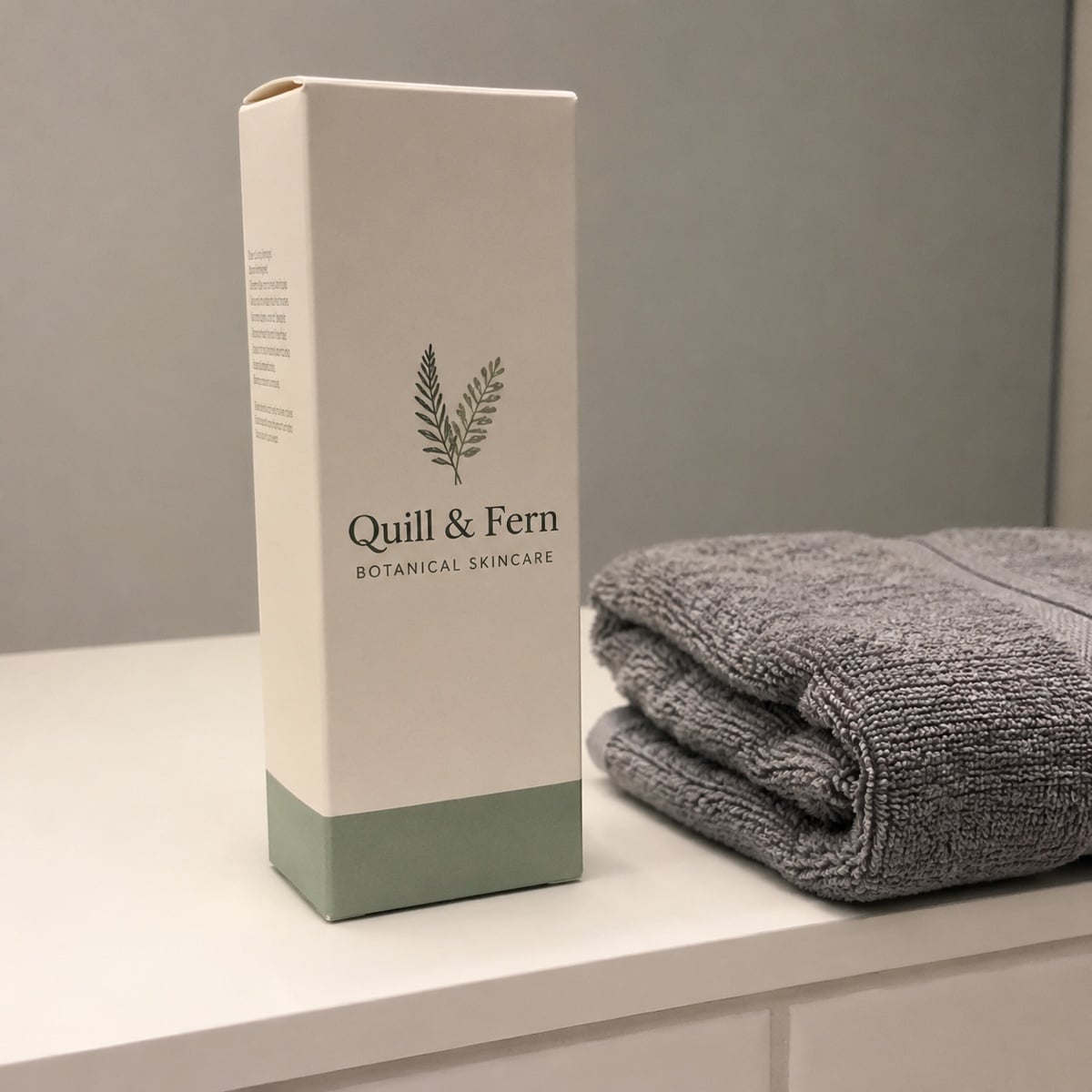
How should candle makers handle many scents with one carton design?
Candle makers handle many scents most efficiently by keeping one shared carton design and changing only a small scent panel or a color band for each fragrance. The brand mark, care instructions and maker details stay identical across the line, while each scent gets its own name, notes and accent color. Shoppers can then see a full collection on a shelf and still find their favorite fragrance quickly.
There are three common ways to run a multi-scent line:
- Fully printed per scent. Each fragrance gets its own printed carton. This gives the cleanest look and works well for core scents that sell steadily.
- Shared carton plus a scent sticker. One printed carton for the whole line, with a small label applied for each scent. This suits seasonal or limited fragrances.
- Color-coded families. Group scents into families such as woods, florals and gourmand, and print one carton per family.
Because the minimum order is 12 per design, a small studio can print a dedicated carton for a test scent without committing to a large run. If a scent becomes a bestseller, the quantity planning guide on the site walks through how many to order on the next run.
What should a candle carton say on the outside?
A candle carton should tell the shopper the scent, the size of the candle in plain terms, the wax type, the wick type if it is a selling point, and the safety and care guidance your market expects. The front panel carries the brand and the scent name; the side and back panels carry everything else. A well-organized carton answers the questions a shopper would otherwise ask at the counter.
Panels that candle makers commonly print include:
- Front: brand mark, scent name, and a short line on the fragrance notes.
- Side: wax blend, wick material, and the burn guidance you already give customers.
- Back: safety warnings, maker details, website, and a barcode for stockists.
- Bottom: a blank or lightly printed area for batch codes and pour dates.
- Inside flap: a thank-you message or a tip for trimming the wick.
Safety wording is your responsibility as the candle maker, so check the labeling rules for every market you sell into. Customized Cartons places the text you supply exactly where you want it on the mockup, and you can request changes until every panel reads correctly.
Which stock and finish suit candle packaging?
Candle packaging generally looks right in one of two directions: natural kraft board for an earthy, handmade look, or white board with rich printing for a polished boutique look. Both work for folding cartons. The choice usually follows the candle itself, so a soy candle in an amber jar often pairs with kraft, while a scented candle in a frosted vessel tends to suit bright white stock.
Finishes then add the detail shoppers notice when they pick up a candle box:
- Foil stamping on the brand mark or scent name catches light on a store shelf.
- Soft-touch coating gives a velvety feel that suits calm, spa-style fragrances.
- Spot UV adds a raised gloss to a pattern or botanical illustration.
- Embossing lifts a logo or a scent icon so the carton feels crafted.
Kraft board and foil are a popular pairing for holiday candles, because the warm board and metallic mark read as a gift without extra wrapping. The site’s guides on kraft versus white stock and folding carton finishes go deeper on each option. Customized Cartons shows your chosen stock and finish on the free mockup so you can compare looks side by side.
When should candle makers order cartons for the holiday rush?
Candle makers should place holiday carton orders well ahead of their first holiday market or wholesale ship date, because the fourth quarter is when most candle studios sell the most. Standard turnaround at Customized Cartons is about 2 weeks after you approve the design, plus the time it takes you to finalize scents, artwork and quantities. Faster turnaround is available with express shipping when a date is tight.
A simple backward plan for a holiday candle line:
- Lock the holiday scent names and vessel sizes.
- Request a quote and send artwork or a rough idea; the free mockup arrives within 24 hours.
- Review the mockup, request any revisions, and approve the final design.
- Allow about 2 weeks for production, then pack candles as soon as cartons arrive.
- Ship to stockists and set up holiday listings with real photos of the boxed candle.
Gift sets need extra time because the box, the insert and the candle count all have to be settled together. If you sell a discovery set of small candles, a rigid box or a subscription-style box with a fitted insert keeps every vessel in place.
How do you order custom candle cartons from Customized Cartons?
Ordering custom candle cartons from Customized Cartons starts with a short quote request listing the carton style, the vessel measurements, the number of scents, and the quantity per design. The team returns a free mockup within 24 hours, offers unlimited free revisions, and you pay nothing until you approve the design. Production then takes about 2 weeks.
To get an accurate quote on the first pass, include:
- The jar or tin measurements, including the lid.
- Whether each scent needs its own printed carton or shares one design.
- Your preferred stock and any finishes such as foil or soft-touch.
- Whether you need an insert, a window, or a hang tab.
- Your target in-hand date and the delivery address.
First-time buyers can also read the ordering checklist and the how it works page, then request a custom quote when the details are ready.
Frequently asked questions
Can candle cartons fit both a jar candle and its wooden lid?
Candle cartons from Customized Cartons can be sized to the full height of the jar with its wooden, metal or glass lid in place. Measure the vessel with the lid on, at its widest and tallest points, and include those measurements in your quote request. The free mockup shows the planned fit, and you can request adjustments before you approve anything for production.
Do tin candles need a different carton than glass jar candles?
Tin candles usually need a shorter, wider carton than glass jar candles, and they rarely need the extra protection glass does. A simple folding tuck-end carton works well for most tins, while glass jars often benefit from an insert or a crash-lock bottom. You can request quotes on both styles together so your tin and jar lines share a consistent look.
Can I print a different scent name on each candle carton in one order?
Candle makers can print a different scent name on each carton design within one order, as long as each design meets the minimum of 12 cartons. Many studios keep the brand layout identical and change only the scent name, notes and accent color. A separate mockup for each scent lets you check every version before production begins.
Is a window carton a good idea for showing candle wax color?
A window carton is a good choice for candles whose wax color, layered pour or decorative vessel is part of the appeal. The die-cut window lets shoppers see the candle without opening the box, which helps on busy retail shelves. The window can sit on the front or side panel, and the free mockup shows its exact position.
What carton works for a candle and matches set sold as a gift?
A candle and matches gift set fits best in a rigid box or a folding carton with a fitted paperboard insert that holds both items separately. The insert keeps the matchbox from scratching the vessel during transit. Printing the carton and insert in matching colors makes the whole set feel like one coordinated gift when the customer opens it.
Should candle cartons list the burn time and wax type?
Candle cartons often list the wax type and an approximate burn time because shoppers compare those details before buying. Use only figures you have tested yourself, and place them on a side panel so the front stays clean. The carton prints the exact wording you provide, and the free mockup lets you confirm every detail reads clearly before the run.
Can stockists and boutiques get candle cartons with their own branding?
Candle makers who supply private-label candles to boutiques or hotels can order cartons printed with the stockist's branding instead of their own. Each private-label design counts as its own carton design with a minimum of 12. Customized Cartons sends a mockup for each stockist, which you can share with the client for approval before anything is produced.
How do I add a batch code or pour date to candle cartons?
Candle makers usually leave a clear area on the bottom or back panel of the carton for a batch code or pour date, then stamp or label it during packing. Printing a fixed code would force a new run for every batch. A small printed outline box on the panel makes sure the stamp always lands in the same tidy spot.
Are mailer boxes better than folding cartons for shipping candles online?
Mailer boxes are usually better than folding cartons for candles shipped directly to online customers, because the corrugated walls survive parcel handling without an outer box. Folding cartons suit retail shelves and wholesale orders packed into shipping cases. Customized Cartons prints both, so many candle brands use folding cartons for stockists and branded mailer boxes for their own web shop orders.
Can small candle studios order seasonal cartons for a single collection?
Small candle studios can order seasonal cartons for a single collection because the minimum is only 12 cartons per design. A studio can test a fall or holiday scent with a short run, then reorder if it sells through. Reusing the approved artwork makes a repeat order of a successful seasonal carton faster to set up.
What information helps get an accurate quote for candle cartons?
An accurate quote for candle cartons starts with the vessel measurements including the lid, the carton style, the quantity per scent, the board stock, any finishes, and whether you need inserts or windows. Add your target delivery date and address as well. Customized Cartons uses those details to prepare the quote and a free mockup within 24 hours.
Get a free mockup for your cartons
Send your logo or idea and the quantity you have in mind. Customized Cartons returns a free mockup within 24 hours, you approve the design before anything is produced, and standard turnaround is about two weeks with faster options available. Get a custom quote.